Saturday, 19 August 2006

Today in the garden ... Dodgem RIP

California poppy and wild chamomile growing in the potato patch

Well, I did say Dodgem looked like he was nearing the end of his rummaging. I found him under the Tewkesbury Baron apple tree this afternoon, and he seems to have died of natural causes. We buried him in a tumulus under the tree.

There are plenty more animals in the garden though. Including this big woolly one who does plenty of rummaging of her own. This is Chiana, our Norwegian Forest cat. She's very camera shy so I never get to photograph her face.


So far I've only tried Mrs Fortune's climbing bean in the form of green beans, i.e. cooking and eating the whole pods, and they're very succulent but I haven't found the flavour to be outstanding. Today I found that this variety really comes into its own when you leave the pods to swell a bit and then shell them out and cook the beans fresh. Shelling them is a bit laborious because the pods are still very fleshy and succulent at this stage, but it's worth it. I also found it hard to find any cooking instructions, because fresh shelled French beans are something you almost never get in the UK ... I guess it doesn't make an economical commercial crop so you don't find it in the shops. Darned shame too, because if these are anything to go by we're really missing out. Boiling the beans in unsalted water (salt hardens the skins) for 5 or 10 minutes seems to do the trick. Mrs Fortune's beans are greenish white and rounded like a haricot. Texture and flavour are wonderful. When fully mature they develop beautiful maroon splodges on the seed coat, but I think for eating they're best before they reach that stage.

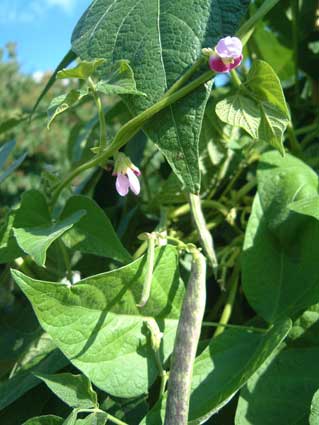
Mrs Fortune's climbing bean has a lovely texture and flavour when cooked without its pods. Notice the variation in the blue streaks on the pods because the blue only develops with exposure to sunlight. The pod at top left is reaching full maturity and is turning maroon and cream. I'm keeping that one for seed.

I also tried some shelled out Kew Blue beans cooked the same way, and they were possibly even more gorgeous ... the beans are slightly kidney shaped and start off white but turn a greyish blue after cooking, and they have a firmer and nuttier texture and flavour than Mrs F. But where Mrs Fortune's really has the advantage is in its mad yields, which far exceed Kew Blue's, so shelling is the obvious thing to do with it since you'd have a heck of a job getting through it all if you ate them as green beans. A preposterously abundant crop.

It's still raining on and off, and I'm starting to fear some of the tomatoes will not get a chance to ripen unless we get an improvement in the weather. It's not the rain that's a problem, it's the grey skies. Tomatoes need a certain level of light in order to photosynthesise; if the sky is overcast for any length of time they just don't grow. I had to move a couple of my American tomatoes because the bed I'd planted them in no longer gets enough sun now that the season is turning and it's getting lower in the sky, and they basically refused to grow any further. Unfortunately I'm completely out of growing space, sunny or otherwise, so I had to create a new bed for them out of the corner of the lawn, give it a frenzied digging over and enrich it with horse manure. It looks ridiculous, sliced out of an otherwise square lawn, but the plants are happy now.

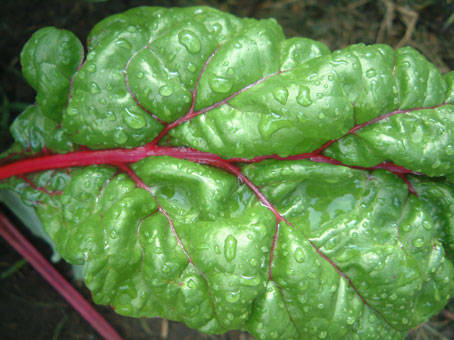
One crop doing especially well this year is rainbow chard Bright Lights; last year the leaves were mangled by an assortment of slugs and caterpillars but this year they're pristine. I'm hoping this is a sign that the ecosystem is finding a balance now. The garden was managed with chemicals up until the time I got it (2004) so it's still in the process of adapting to organic.
Thursday, 17 August 2006

Today in the garden ... wet fruit

This is one of the reasons I fell in love with this garden the moment I set eyes on it

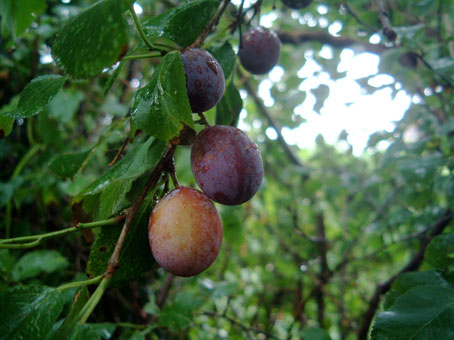
Up until the 1920s and 30s, the west side of Cheltenham was covered with orchards and lots of different fruit trees. As the town expanded almost all of it disappeared. Our house was built in the mid 1930s on land which had been growing damson trees (damsons are like small plums) and although most were lost a few of the original trees still survive along garden boundaries. I'm especially lucky to have two in my garden (although one is growing on the corner point of three gardens so it's hard to say who actually owns it). One has fairly large black fruits with a grey bloom and is slightly on the bitter and tastless side, to be honest. The other one (shown in the photo) has smaller, golden-reddy-purple fruits which taste exquisite. So exquisite I even crawled through a big heap of stinking soggy twigs to get at them and ended up with a spider in my hair. Ewww.

It's been a really good year for tree fruit. They don't seem bothered by drought, but then Cheltenham is a spa town and there's underground water pretty much everywhere in this area, so they've probably got their roots into the nearest aquifer. The damsons have been very abundant. I also have an old and decrepit pear tree which is fruiting like billio. I don't actually like pears as it happens, but I can certainly find willing recipients to palm them off onto. And the apple trees I planted earlier this year are looking fine and dandy.

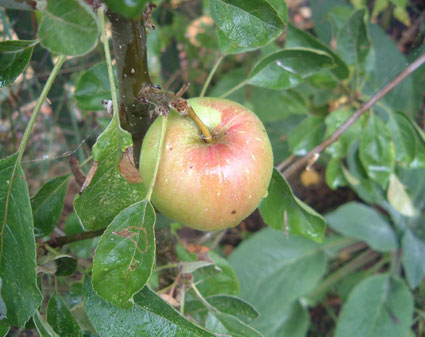
A Tewkesbury Baron apple, a local heritage variety I planted just a few months ago

I haven't seen Dodgem out on the prowl for the last couple of days so hopefully he's gone back to his regular nocturnal routine. It certainly looks like it, because I had a pot of holy basil ransacked overnight and its contents spread across the patio and in the cats' water bowl. But one thing I have discovered is where he hangs out during non-rummaging times. And I found it because I heard him snoring while I was tending some tomato plants at the bottom of the garden. When Shakespeare wrote his famous three witches scene and came up with the line "Thrice and once the hedge-pig whin'd" he was using some artistic licence, because the noise they make is more of a wheezy snuffly slurp. But then I guess "wheezy snuffly slurp" would have been harder to fit into an iambic tetrameter. Not to put too fine a point on it, hedgehogs sound like somebody with a very bad cold. And following the noise to its source, I found a narrow hedgehog-sized gap between the chainlink fence and a large log which forms the boundary of my bog-garden, and there was Dodgem curled up asleep with a few flies buzzing round him.

Things I've learned today: if you're cleaning out a vase with a long and very narrow neck it's NOT a good idea to turn the tap on full blast.

It's been perfect weather for the garden today because it chucked it down with rain all morning and then the sun came out. No matter how much effort you put into irrigation the garden always responds best to real rain. And now the sun will help the plants make the most of it. Rain followed by sun makes everything smell wonderful, and the water and light create some beautiful photo opportunities.

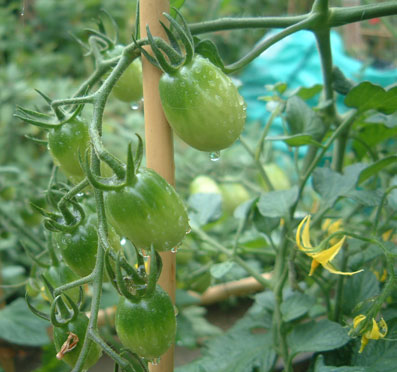
I don't have any red tomatoes yet, but the green ones give me plenty to look at. This is Pink Jester ...

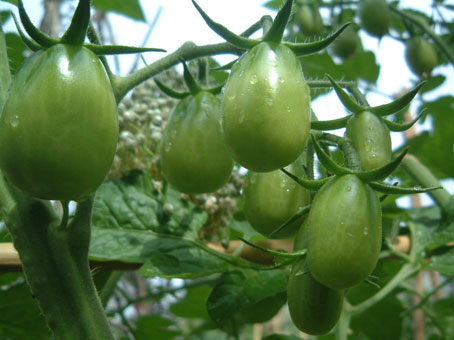
... and this is the Russian heirloom Black Plum

Monday, 14 August 2006

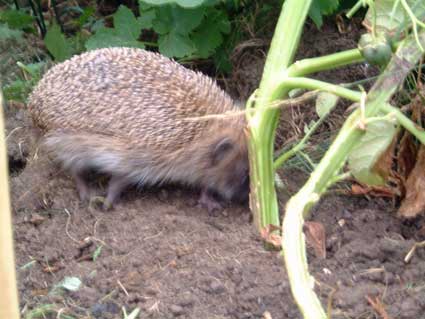
Today in the garden ... the rummager unmasked!

Evidence of rummaging

I went out for my morning inspection of the garden and discovered that my Alderman pea seedlings (above) had been rummaged overnight, as had my newly planted potatoes and a few leeks. The mulch of grass cuttings I put around my tomato plants a few days ago had been burrowed into and flung all over the path. Grrrr!

But this time there was forensic evidence! There in the soil around the pea seedlings were some claw marks, and in one place something resembling a footprint. It wasn't very clear, but enough to see that the phantom marauder has small clawed hands with a spread of about half an inch. Which immediately led me to conclude it was a hedgehog. It's the most common nocturnal digger in the UK with feet of that size, and it eats worms and grubs. It still doesn't explain how or why it got to the pots I'd put in high places, but it was by far the most likely.

And then I turned round and saw the culprit himself! A hedgehog waddling across the scrubby patch of lawn I laughingly call a wildflower meadow at the bottom of the garden. "That's odd," I thought. "They don't normally come out in the daytime." I had the camera in my hand so I managed to snap the evidence before he sauntered off into a pile of discarded potato haulms.

Rumbled!

And another thing that was odd ... he showed no fear of me at all, and not even much awareness that I was there. Most hedgehogs leg it into the bushes when they encounter a human. Then I got a closer look at him and saw that he was blind. In fact he looks like a very elderly and decrepit hedgehog indeed and I fear his rummaging days are drawing towards their natural close. I stood very still for a bit so as not to startle him and he came right up to me, brushed against my legs and then walked over my foot!

One of my cats came out to see what was going on but she obviously knows that prodding hedgehogs is not a good idea so she just sat and looked at him. At first I thought he was on his last legs because he spent some time slumped under a butternut squash plant making wheezing noises, but then he got up and started scampering about ... found his way into next door's garden and then came back in the late afternoon and scampered around on the patio, trampling my chocolate cosmos in the process.

I'm calling him Dodgem because he charges around bouncing off things. He seems happy enough; he can't see where he's going so he just crashes through stuff.

Out on a 24-hour rummaging spree. And I hoped you wouldn't get to see those horrible slug-tunnelled spuds. Dang.

Sunday, 13 August 2006

Today in the garden ... pollination fun

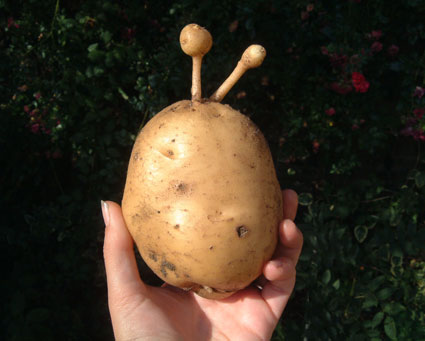
Evidence that Marfona potatoes have been infiltrated by aliens?

I've just harvested the remainder of the Marfona potatoes, having let them mature to baking size, and bloody delicious they are too, especially with a bit of melted cheese on them. In addition to some whopping spuds there were lots of baby new potatoes just starting to form (some of which I've planted up as they're too good to waste) plus a few more ripe potato apples for seed. They're very generous plants.

Alan Romans in his Potato Book describes Marfona laconically as "the slug's favourite". And he ain't kidding. I've found tubers which are completely hollowed out, and I'll certainly spare you the sight of the ones that have been adopted as community housing for woodlice. But ... invertebrates love Marfona for the same reason I do – it's the moistest and waxiest of baking spuds and the flavour is gorgeous. I wouldn't be without it, however many I have to toss into the compost bucket with a cry of "eeeuuurgh!"


I learned to string onions yesterday, thanks to Greenmantle and the instructions he put up on his blog. I'm quite pleased with that. They're Hysam onions and probably the best I've grown yet.

I've been doing a lot of hybridising this week, trying to get the knack of hand-pollinating tomatoes (success!) and French beans (urgh!) so that I can write up the instructions here. I've never pollinated tomatoes before so I wanted to try it out first before writing it up to be sure I was doing it right. And the first couple of lots I did all fell off without turning into tomatoes, which shows how much I know about it. But I think I've now found what I was doing wrong, so I'll post the instructions here shortly. I hope this stuff is of interest to some of you out there. I would love to think I've encouraged people to have a go at hand-pollination and amateur plant breeding because I think it's really important, and it's a lot of fun. It's a great shame that the vast majority of gardening books don't even mention it ... while at the other end of the scale much of the useful practical information is buried in academic papers and you need a degree in biology just to work out what the hell they're on about. Most of what I know came from Carol Deppe's book and from getting out there with a scalpel and trying it for myself. I'm still learning all the time. I'm just pollination crazy and I'll hybridise anything that's biologically possible just for the hell of it.

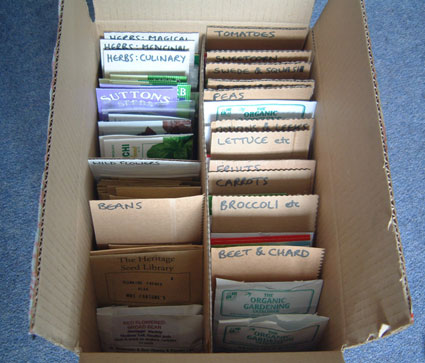
I also love seeds and we're now getting into seed collecting season, which is one of my favourite times of year. I already have stuff drying on window sills all around the house, and am getting through huge numbers of little manila envelopes. I try to be disciplined about labelling things these days. I'm the most disorganised person in the whole of the west country, so nobody was more surprised than me when I suddenly created this boxed filing system one day last year on a momentary whim, after years of distributing my seed packets round every cupboard in the house and tucking them into bookcases.

Tomato cross-pollination issues

I'm currently writing up an article about making your own tomato hybrids, and I'm just going off on a related detour for a moment.

There's a lot of conflicting information about how readily tomatoes naturally cross-pollinate. Some gardeners swear they never do, while others report getting weird hybrids showing up when they least expect it. I've even bought a packet of baby cherry tomatoes from a major seed catalogue and had them grow into beefsteak-style monsters. Tomatoes are essentially inbreeders and have no biological imperative to cross-pollinate, but clearly they sometimes do.

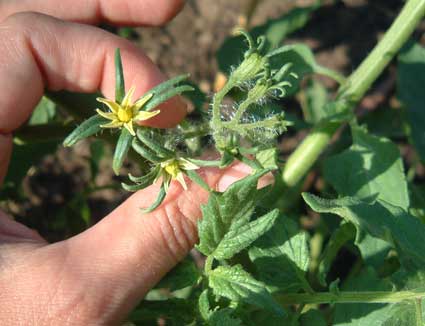
Well, in the last few weeks I've spent a lot of time on my hands and knees staring into tomato flowers, and I think I can see how a lot of the confusion arises. Tomato flowers may appear pretty similar ... those little yellow cones and star-like petals are much of a muchness. But once you start peering at them closely, and more importantly, taking them apart ... you find there's a heck of a lot of diversity between varieties which potentially affects their pollination habits. And not only does it vary between varieties, it may affect them differently from garden to garden and with the weather and a whole lot of other factors. Which would explain the reams of conflicting information about whether/how tomatoes cross.

Big elongated green sepals are a quirky feature of Tangella flowers, whose buds look like tiny curled stars

Tomato flowers all have the same basic structure. The yellow cone in the centre is made up of anthers which are fused together. In most cases the cone is sealed all round so that insects can't get in, and the pollen is shed on the inside. Under normal circumstances the pollen falls straight onto the stigma (which is enclosed inside the cone) without ever coming into contact with the outside world. And that's why tomatoes rarely cross-pollinate.

But ... sometimes they can. These are the observations I've made on my own plants ... pollinator activity varies hugely from garden to garden.

Tangella, as I've mentioned before, has oddly structured flowers. The sepals are curled over backwards even in the earliest bud stage, and as the flowers develop the sepals remain hugely longer than the petals. On the inside though, the reproductive bits of the flower are pretty normal and average. It's a nice easy one to hand-pollinate because the pistil is large and the stigma very obvious when it's receptive. But the curliness isn't just in the sepals; the anther cone also curls outwards at the very tip, and that creates a small hole, big enough for a small insect to get inside. So although the pistil is short enough that it remains just inside the cone and may not be reachable by bees, it could theoretically be pollinated by something else.

Clementine has smaller paler flowers than average which grow in unbelievably massive trusses. The anther cones are compact and stay tightly closed, so self-pollination is assured. But ... unlike all the other tomatoes I'm growing, Clementine attracts bees. Particularly bumble bees. They don't get a lot of joy out of it because the flowers are tight shut and I've had a few amused moments watching them desperately paddling their legs on the petals trying to get in. But they keep coming back, and if they really want to get at the pollen they may bite their way through the anther cone, which would be the first step towards cross-pollinated tomatoes.

Black Plum produces quite generous amounts of pollen, even in cool weather. It has an anther cone which is fairly open at the end, and a pistil which is long enough that the stigma is flush with the tip of the cone and therefore accessible to pollinating insects. But in my garden the insects don't go near it. So I would say Black Plum is biologically more geared up for cross-pollinating than most tomatoes, but what with throwing so much of its own pollen around and lacking insect allure I think it's still most likely to self-pollinate. But in certain circumstances I could see it hybridising like mad.

Saturday, 12 August 2006

Today in the garden ... the phantom rummager

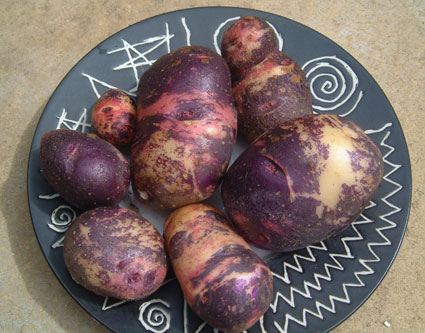
Newly harvested Mr Little's Yetholm Gypsy potatoes ... can't get enough of these beauties.

On the whole I've had a slow week in the garden again. The muse has been upon me and my hands have blisters from guitar playing.

But a mystery is unfolding out there. Every night some unidentified critter has come along and ransacked the pots on my patio. It's wrecked several trays of seedlings and pulled stuff out of tubs. And now it's taken to digging out seedlings in the garden too.

I assume it's a small nocturnal mammal of some sort, but I don't know what it is or what it's looking for. It doesn't eat the plants or their seeds, it just rummages about in the soil medium, casting aside any seedlings which get in its way, then buggers off. Leaving me to replant everything in the morning.

The first thing it went for was a large half-a-beer-barrel tub in which I'd sown some nasturtiums and California poppies. The whole lot got raked out night after night no matter how many times I resowed it. Then while I was away in Wales it hoiked a good sized Sweet William seedling out of its pot which I'd been nurturing for months.

I thought I'd foil the little blighter by putting the seed trays on top of a large wire cage I have in the corner of the patio (I use it to thwart the snails in spring). But it managed to get up there and drag all the seedlings out of their pots again. I have one safe place ... the top of a patio table ... and that's where I'm keeping my precious experimental pea seedlings. Everything else gets rummaged.

So I'm baffled ... and somewhat fed up with having my horticultural efforts wrecked on a nightly basis.

I planted out some more pea seedlings this week, since Ezethas Krombek Blauwschok is already producing good sized plants and I have a new batch of Mr Bethell's Purple Podded on the go. At this time of year the priority is to get stuff into the ground so that it can make the most of what's left of the growing season ... very different from springtime, when I let things grow for longer in their pots to give them a sporting chance of surviving the snails. Snails are now being efficiently controlled by the frogs and slow worms and aren't a problem. So the only hindrance the plants face now is the phantom rummager, which has hoiked several pea seedlings out of the ground altogether and dug neat little scrapes around the bases of all the others. Bastard.

The patch of ground recently vacated by the onions is now becoming a pea patch. I'm planting them out a bit more widely spaced than the earlier crop, in the hope that keeping a bit more air circulating around them will minimise the impact of powdery mildew. My experience is that most heritage varieties have poor resistance to it (one exception being Ne Plus Ultra and I'll be trying some of that next year) and this late crop is more at risk since it'll be setting pods in the moist autumn weather. But the peas are certainly hitting the ground running ... they grow very quickly at this time of year, especially if you keep them well watered. I dug in some manure and seaweed meal beforehand to enrich the soil. I've run out of pea sticks though and had to cut some new ones from an obliging tree. Fortunately the Ceanothus tree had a ready supply of dead branches of exactly the right size, and has just the kind of straggly spindly twigs that peas love.

A fanfare please for the emergence of my first F1 hybrid pea! The ones in the tubes behind it are Golden Sweet ... no germination problems at all with those.

The pea in question was one of those huge ones which appeared in the photo in my 28th July post. You saw how big it was straight from the pod ... well it swelled up even more when it was planted. I can see it under the vermiculite and it now looks more like a grape than a pea. And the good news ... you can't really see this in the picture, but the emerging seedling has a distinct purple blush on the leaf veins. That means it's definitely the result of a successful cross, because it came out of an Alderman pod and pure Alderman seedlings don't have any purple on them at all. And secondly it's consistent (so far) with what I'd predicted, that the F1 offspring are expressing the dominant A gene which enables purple colouring.

It's interesting (well it is to me anyway) to compare it with the Golden Sweet seedlings growing on the same saucer. They germinated much quicker, so although I planted them more recently they're at about the same stage. Thing is, although they're a yellow-podded variety they're showing more purple colouring in the stems and leaves than the purple-podded types. So Golden Sweet must have the same A gene as the purple-podded peas, which I should have realised as soon as I saw the purple speckling on the seeds. Gene A switches on the plant's ability to produce anthocyanin, the chemical pigment which produces red, blue and purple colouring; but a series of other genes, some dominant and some recessive, control where in the plant the colour appears. Presumably Golden Sweet has a gene which puts a splash of anthocyanin into the seed coat, and another that fills the flowers with it (the variety has unusual purply blue flowers), and another yet that keeps it out of the pods so that they express a beautiful golden yellow colour.

My non-gardening neighbour, whose back garden is a tangled mess of overgrown grass which he rarely ventures into, had some beautiful California poppies glowing amid the weeds earlier this year. Just the standard orangey-gold ones, but really beautiful specimens. I coveted some, but I was too shy to go round and ask for some seeds, and although much tempted just to leg it over the fence while he was out at work, I never did. But nature has provided; a self-seeded California poppy flowered in my garden today and showed itself to be the same type as next door's. I'm very chuffed with that.

And talking of poppies, I still have a few late flowers on the Mother of Pearl poppies but at this point in the season they often come out smaller and more crinkly than normal. Like this white one, which had smooth single flowers a month or two ago and has now produced this small frizzy double flower, which I rather like.

Friday, 11 August 2006

How to hand-pollinate sweet peas

Why would you want to? Well, I'm thinking that it might be fun for those who want to try breeding their own unique varieties. Also, as it's fairly easy to do, it would make a good starter project for anyone who wants to try out hand-pollination for the first time.

I'm not providing any information on sweet pea genes here ... and that's because I don't know anything. So if you want to try it it'll just be a case of breeding two different things together and seeing what happens. But that's all part of the fun. Try cross-pollinating plants with very different flower colours and see what you end up with.

Hand-pollinating sweet peas is exactly the same method as for culinary peas (which I covered in detail in another post), except that it's a lot easier because the buds are bigger and easier to open and the stigma is so huge you can't miss it. The only bit that's slightly tricky is making sure you choose buds at the right stage. Sweet peas are inbreeders and are very efficient at self-pollinating while the buds are still quite young. To make a cross, you have to catch them just before they self-pollinate and remove the anthers (emasculation). Luckily the anthers in sweet peas are large and easy to pull off.

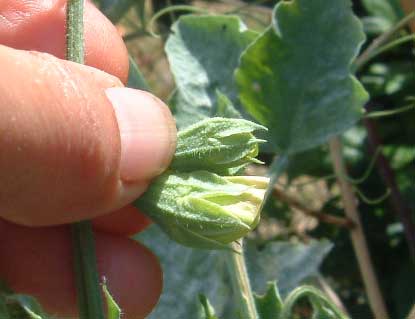
The lower bud is at the right stage for hand-pollination. The petals are just starting to emerge from the sepals (that's the outer bit that looks like a little green pixie hat) but haven't really started to develop their colour yet.

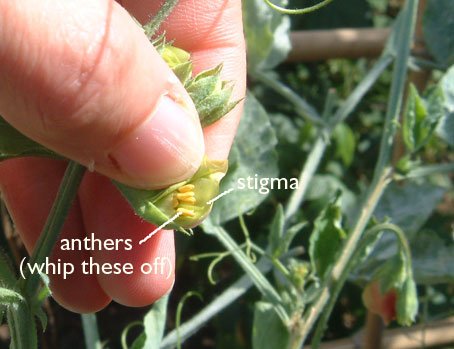
This is the same bud with the outer petals folded back and the inner keel petal removed. You will find a long green pokey thing (style) with a receptive tip (stigma), plus ten yellow anthers. Check that the anthers have not yet begun to shed pollen (if they have it's too late) and carefully remove them all with a scalpel blade.

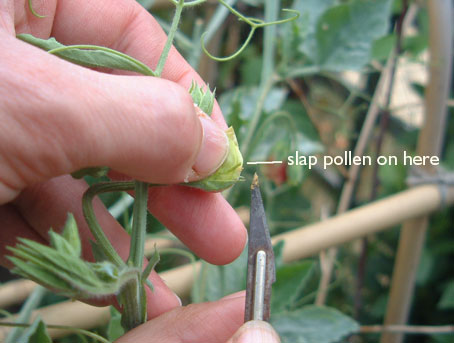
Now collect some fresh pollen from the donor plant ... a bud that has just opened is usually ideal. Collect it on the blade of the scalpel and then carefully dab it onto the stigma of the first bud. The stigma is right at the very tip of the green pointy thing. You should see the grains of pollen sticking to it when you've done it right. Then just fold the petals back into place and let nature do the rest.

Don't forget to mark the pollinated bud though (I usually tie coloured threads round them) or you'll never find it again!

(With thanks to my husband Ian for the loan of his fingers in this photoshoot)

Monday, 7 August 2006

Today in the garden ... harvest time

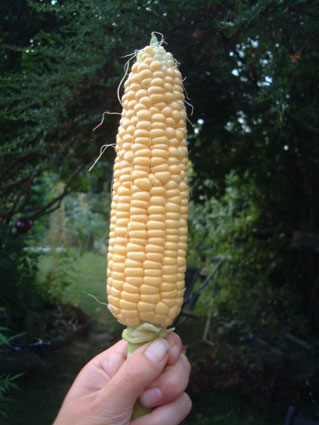
Just showing off my Swift F1 sweetcorn, which is as big as any supermarket cob and far tastier. Not bad for a crop which supposedly doesn't appreciate the British climate

I've had a lot of catching up to do after my time away ... lots of weeding, deadheading and propping up things that have collapsed under the weight of their own abundance.

You may remember I've been ripening up a potato apple I found on one of my Marfona plants. Well, it's about as mature as it's going to get so it's time to extract the seeds from it.

There's precious little information out there about raising new potato plants from seed because not many people do it ... but it's basically the same as for tomatoes. The advantage of growing potatoes from seed is that they are likely to be free from any virus (unlike tubers, which store viruses very efficiently!) and it's also a voyage of discovery because every seed is potentially a new variety, with no two being quite the same.

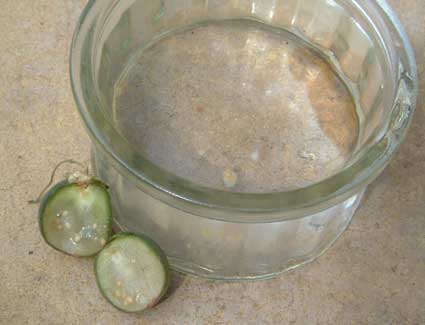
Just slice open the ripe potato apple (it's ripe when it just starts to go soft) and scrape the seeds out into a container of water. Any seeds that float are not viable and can be got rid of. Wash the sinkers to remove all the pulpy goo (a sieve or tea-strainer is probably the best way to do it) then spread them out to dry thoroughly.

As they're not hardy, I'll have to wait until the spring before I can sow them.

Marfona potato apple: it looks like a tomato from the outside ... and it's not dissimilar on the inside too. The seeds look like small tomato seeds and are easy to extract in a jar of water.

At last, one of my F1 hybrid experimental peas has germinated! I'm so relieved. It was one of the ones I sowed fresh from the pod into high quality coir and vermiculite. I've also got another batch started off in bog-roll tubes as per my usual method, and I'll see what happens to those. These are ones which I'd allowed to dry out before sowing them ... I want to see whether that makes a difference.

At this time of year lots of stuff is ready to harvest. I pulled up the Hysam onions today as it's been a couple of weeks since their foliage flopped over, so they're about ready.

Hysam onions drying in the sunshine

I've got more French beans than I know what to do with, and I've started to let Mrs Fortune's develop mature beans rather than keeping on picking the young pods. The plants have rather cheekily lashed themselves around some adjacent bamboo frames, having outgrown their own (7ft) supports, and are trying to take over the garden by stealth. I now have funny little blue-streaky pods growing among the tomatoes ...

Mrs Fortune's climbing bean is hard to beat if you want high yields and rampant vigour

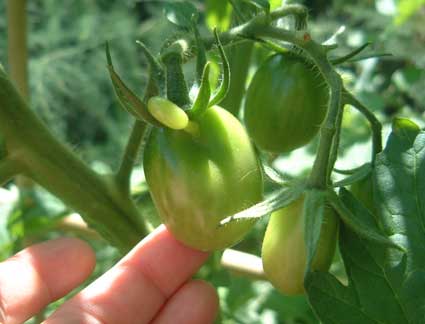
And there's more weirdness among the tomatoes. I notice one of the developing fruits on Black Plum has a strange appendage growing out of it. Not sure if it's trying to grow into a spare tomato or what. Anybody else had something like this?

Black Plum also has the distinction of being the healthiest and most rampant of all the tomato varieties I'm growing ... it's already over the top of the bamboo frame I made for it way back when. At the other end of the spectrum, my Pink Jester plants are looking very straggly and distorted and two of the three plants have elongated fruits which are not true to type. I dunno why that is, because they're from the same batch of seed I've sown for the last few years. They're oddly elongated with pointy tips, like peppers. Very curious.

Strange knobbly sticky-outy bit on a Black Plum tomato ... hmmm!

Sunday, 6 August 2006

I'm back!

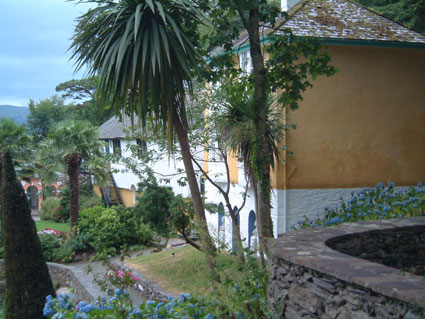
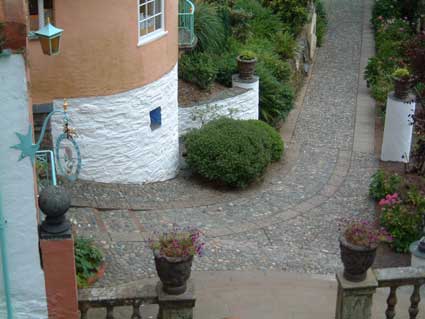
And this is where I've been ... Portmeirion in North Wales.
Not exactly a typical Welsh scene but they do have some nice blue hydrangeas and a sheltered microclimate


It's a very quirky private village and garden mostly built in the 1920s and 30s, and probably most famous for its use as a film set for the strange 1960s TV series "The Prisoner".

Me on the beach at Portmeirion, best known to Prisoner fans as the place where Patrick McGoohan got swallowed up by a weather balloon called Rover. Um ... yeah ... you had to be there really ...

The nearby scenery ain't bad either. This is part of Rhaeadr y Cwm, near Llan Ffestiniog. It was full of dragonflies, butterflies, acid-loving peat-bog plants, richly coloured foxgloves, and sheep.